Insights & Cases / Enterprise Custom Content

ANONYMISED LEARNING DESIGN EXAMPLE

Fraud awareness.
Make the next step clearer.

From a policy topic to a practical learning experience: illustrated situations, responsibility mapping, reporting guidance and judgement questions.

Custom ContentBankingFraud awarenessSpeak-up learningDesign example
Explore the learning design ↓

DESIGN IN PRACTICE / FRAUD AWARENESS

From policy to
practical judgement.

Fraud-awareness training needs to help employees recognise warning signs and decide what to do next. This example explores how narrative, visual structure and questions can make a complex compliance topic easier to navigate.

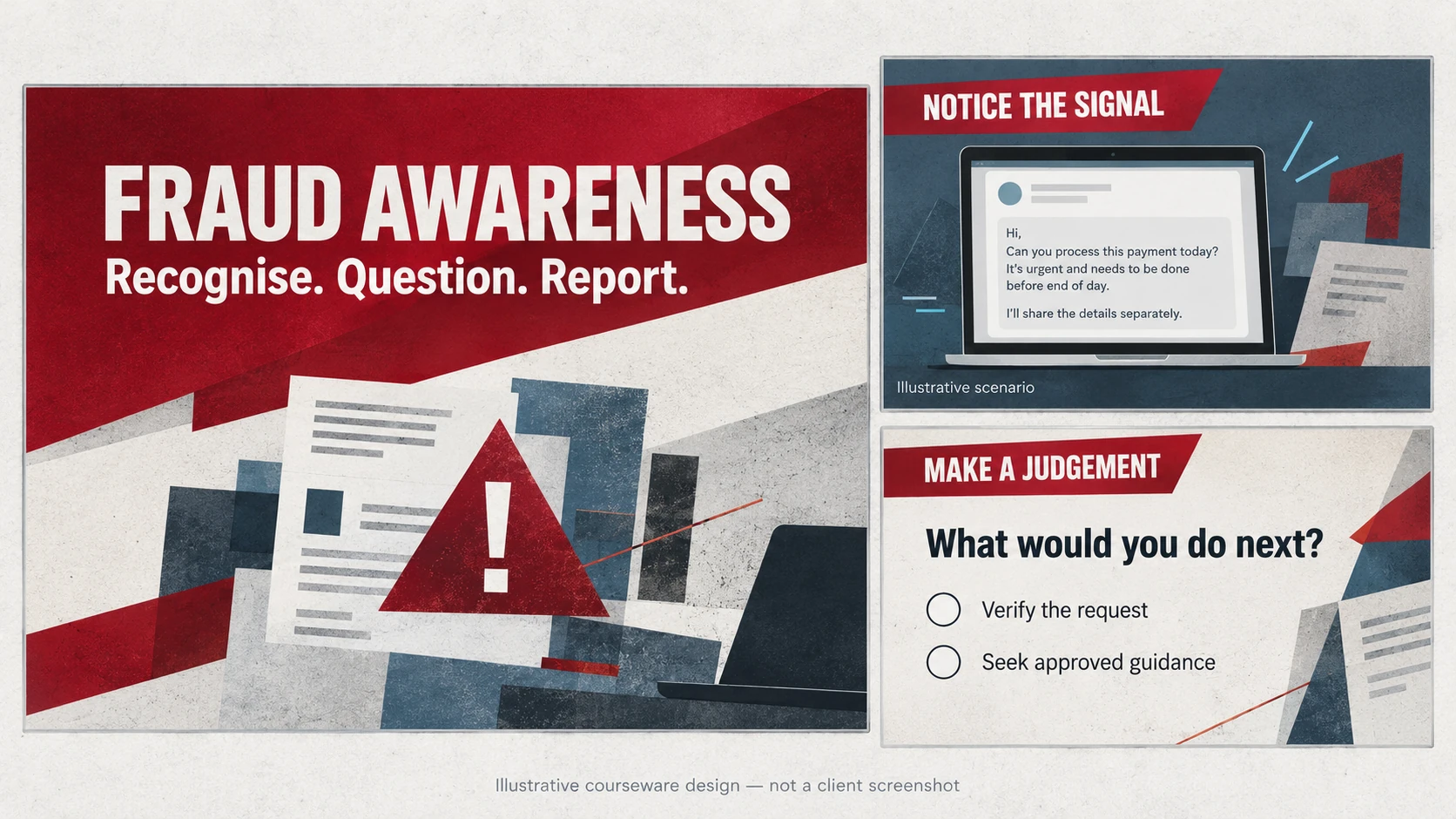
Illustrative fraud-awareness courseware montage with crimson and slate-blue panels, a fictional scenario and a judgement activity; not a client screenshot.
Illustrative courseware design, created with AI: an editorial montage of fictional learning screens. The visual language draws on the reference’s paper texture, angular panels and crimson/slate palette; the wording, scenarios and layout are new. Not a client screenshot, a live course or evidence of results.
01 / THE BUSINESS QUESTION

What should an employee notice?

A policy can describe risk without making the next decision obvious. A useful learning brief identifies the situations employees need to recognise, the responsibilities they need to understand and when to use an approved route for raising a concern.

02 / THE OBSERVED DESIGN

A narrative with a learning purpose.

The supplied banking course-design material uses an illustrated attack-and-defence narrative to introduce fraud risk, staff responsibilities and internal reporting. Selected screens show a structured visual explanation of reporting situations and a true-or-false judgement question.

03 / THE LANGUAGE DESIGN

Make meaning consistent.

The source material lists Traditional Chinese, Simplified Chinese and English. For a new programme, terminology, scenarios and reporting instructions should be reviewed in every required language, rather than relying on a word-for-word translation.

WHAT THE MATERIAL SUPPORTS

A specific learning-design example.

  • Scenario-led illustrated learning about fraud and misconduct
  • Explanation of risk-management principles and staff responsibilities
  • Visual organisation of internal-reporting situations
  • A judgement-question activity
  • A three-language course-design scope listed in the material

This is historical design evidence. It does not establish deployment, learner completion, reduced fraud losses or a particular LMS integration. New course content must use current material approved by the organisation’s relevant subject owners.

DESIGN A NEW PROGRAMME

Scope the decisions.
Then build the learning.

Cyberwisdom Group can scope custom eLearning around the business situations your employees face. Begin with the approved policy, audience, reporting routes, learning objectives, languages and responsibilities for content review.

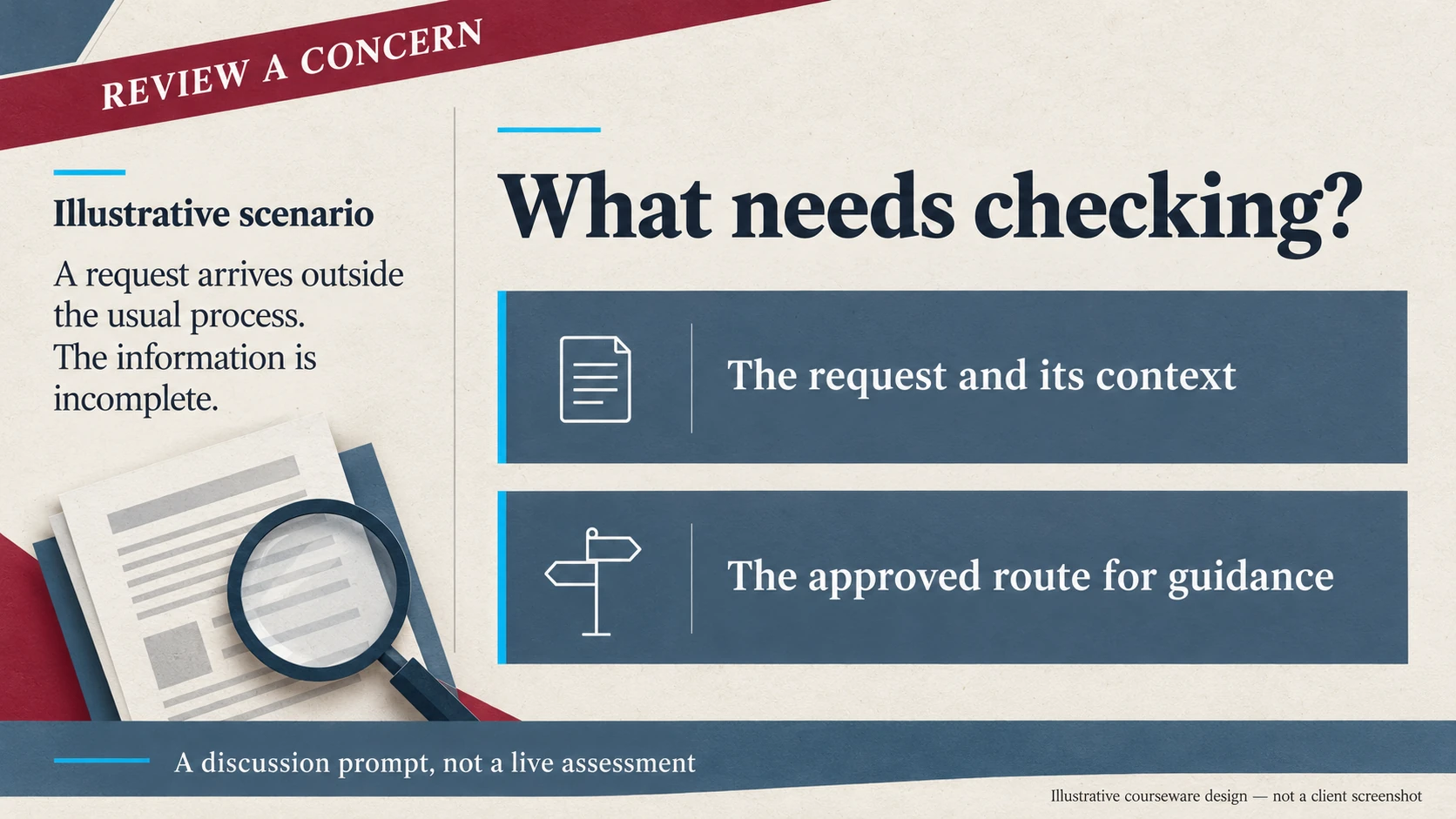
A new design might connect a short scenario with an explanation, a decision question and appropriate feedback. The illustration above shows this general approach; its specific scenes and answer wording are not presented as features of the original course.

If learning records or refresher assignments are required, agree the target LMS, assessment behaviour and reporting requirements separately. Test the agreed delivery scope before launch.

Illustrative decision-screen design using fictional text, crimson ribbons, slate-blue answer areas and paper texture; not an original client screen.
Fictional decision-screen illustration, created with AI. The prompt and answer areas demonstrate a possible visual treatment; they do not reproduce an original question, show a correct answer or establish an assessment result.

Questions to answer before production.

What do we need to provide for fraud-awareness course design?

Provide your approved subject matter, the intended audience, representative situations, language needs and the reporting instructions employees are authorised to follow. Agree who reviews the content and how policy changes will be maintained.

Can the course teach our internal reporting process?

The learning can be designed around an organisation’s approved reporting process. Confirm the roles, channels, escalation conditions and wording with the relevant policy owners. This example does not prescribe a reporting hierarchy or offer legal advice.

How should judgement questions be reviewed?

Agree the decision being tested and the basis for the answer with the subject owner. Check that the scenario provides enough context and that any feedback matches the approved policy. A question appearing in course material does not prove an improvement in real-world decisions.

Does this demonstrate an LMS or enterprise AI implementation?

No specific integration is established by this material. Course delivery, learning records, system integration and any AI-assisted workflow are separate requirements to scope and verify.

Make your approved fraud-awareness and speak-up material easier to apply.

Discuss your learning brief ↗

EXPLORE NEXT

Related methods.
Different learning decisions.

Compare this focus on warning signs, responsibilities and reporting with an anti-bribery example focused on classification and judgement.