Insights & Cases / Custom Content

ANONYMISED LEARNING DESIGN EXAMPLE

Wealth fundamentals.
Compare. Question. Explain.

Connect comparison content with the questions learners need to recognise and explain, using visual structure and judgement activities.

Custom ContentInsuranceFinancial learningDesign example
Explore the learning design ↓
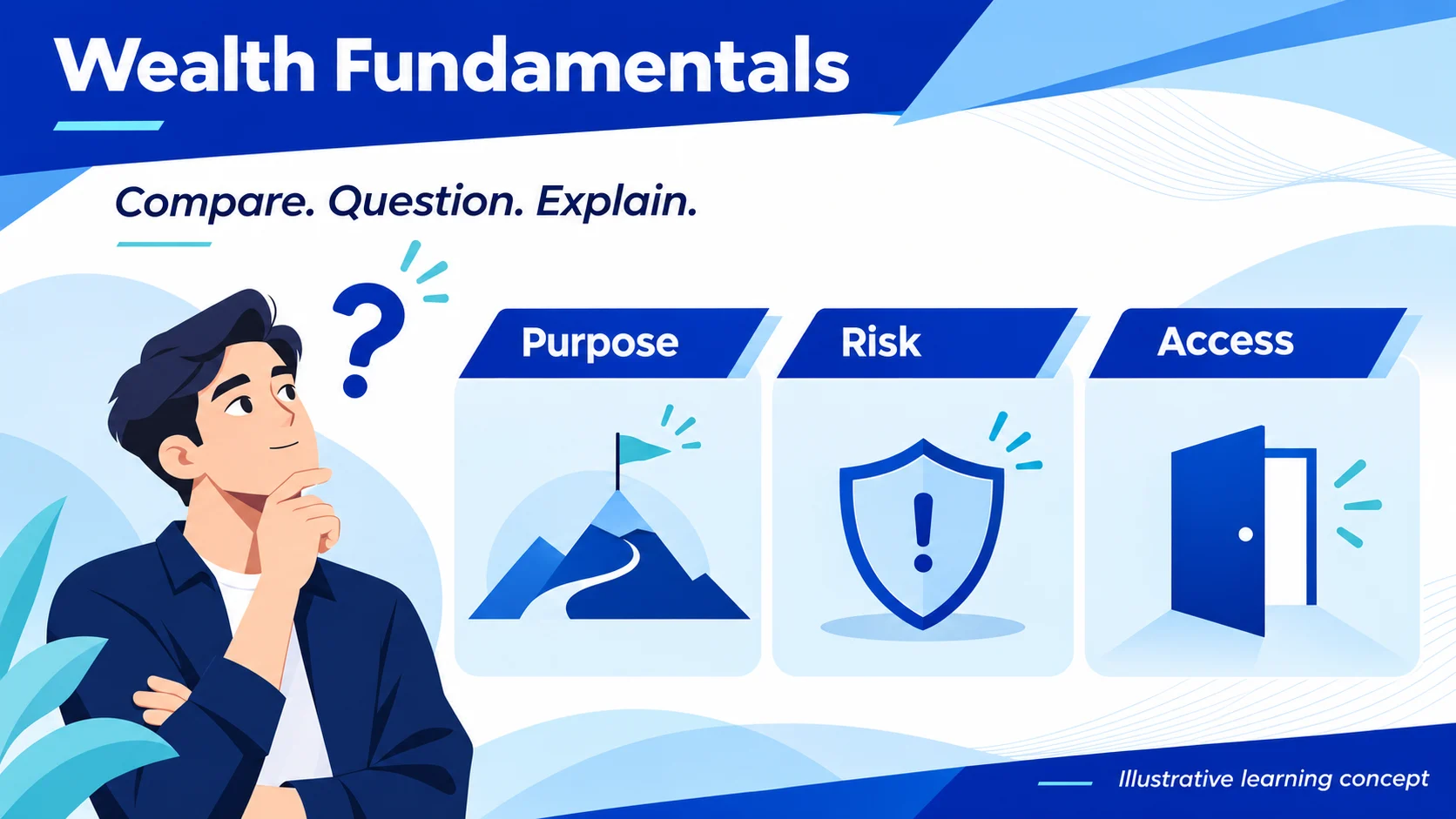
Fictional cobalt and ice-blue wealth-learning concept with a thoughtful learner and three abstract comparison themes.
AI-created illustrative learning concept. The character, wording and composition are new; no original client screens, product names or figures are reproduced.
01 / LEARNING CHALLENGE

Move from a feature to its meaning.

Financial-learning content can contain labels, comparison tables and figures that need context. The learning-design task is to help an audience identify what a statement describes, which qualifications matter and when a question needs a fuller explanation.

02 / OBSERVED APPROACH

Comparison followed by a question.

The supplied course-screen sample shows an introduction, a course overview, learning objectives, product-comparison material and a character-led yes-or-no question. Subsequent views show explanatory feedback over the question scene.

03 / PRESENTATION

A distinct course identity.

The new showcase uses the requested cobalt and ice-blue palette while adapting the sample’s geometric structure, wave-shaped edges, comparison areas and conversational character. The opening screen also displays three language-selection controls; the screenshots do not independently establish the completeness of each version.

What this sample supports.

  • Course orientation and visible learning objectives
  • Structured comparison of product-related information
  • A learner question presented through an illustrated character
  • Yes-or-no interaction and explanatory feedback screens
  • Language-selection controls on the course introduction

The sample does not establish sales improvement, learner completion, advice quality or regulatory outcomes. It is evidence of learning design, rather than an endorsement of a product or a current product explanation.

Design a new programme around approved sources.

Agree the audience, the concepts they need to distinguish and the questions they should be able to handle. Assign subject owners to approve product descriptions, qualifications and answer rationales before production.

Use a consistent comparison structure, then introduce questions that require learners to interpret context rather than recognise a headline alone. New products, language versions and revised source documents should each have a defined review process.

Questions before commissioning.

Can the comparison use our product information?

Scope the material with the relevant subject owners. Confirm approved terminology, qualifications, source versions and the review required for the intended audience and use.

How should feedback be accepted?

Check that each question supplies enough context, that its response is defensible and that feedback follows the approved source. Keep product and learning review responsibilities explicit.

Turn approved financial-learning material into a clear learning experience.

Discuss your course brief ↗

Related insight: better questions, clearer explanations ↗