
CUSTOM CONTENT / RISK LEARNING
Reputation-risk training starts with the employee decision.
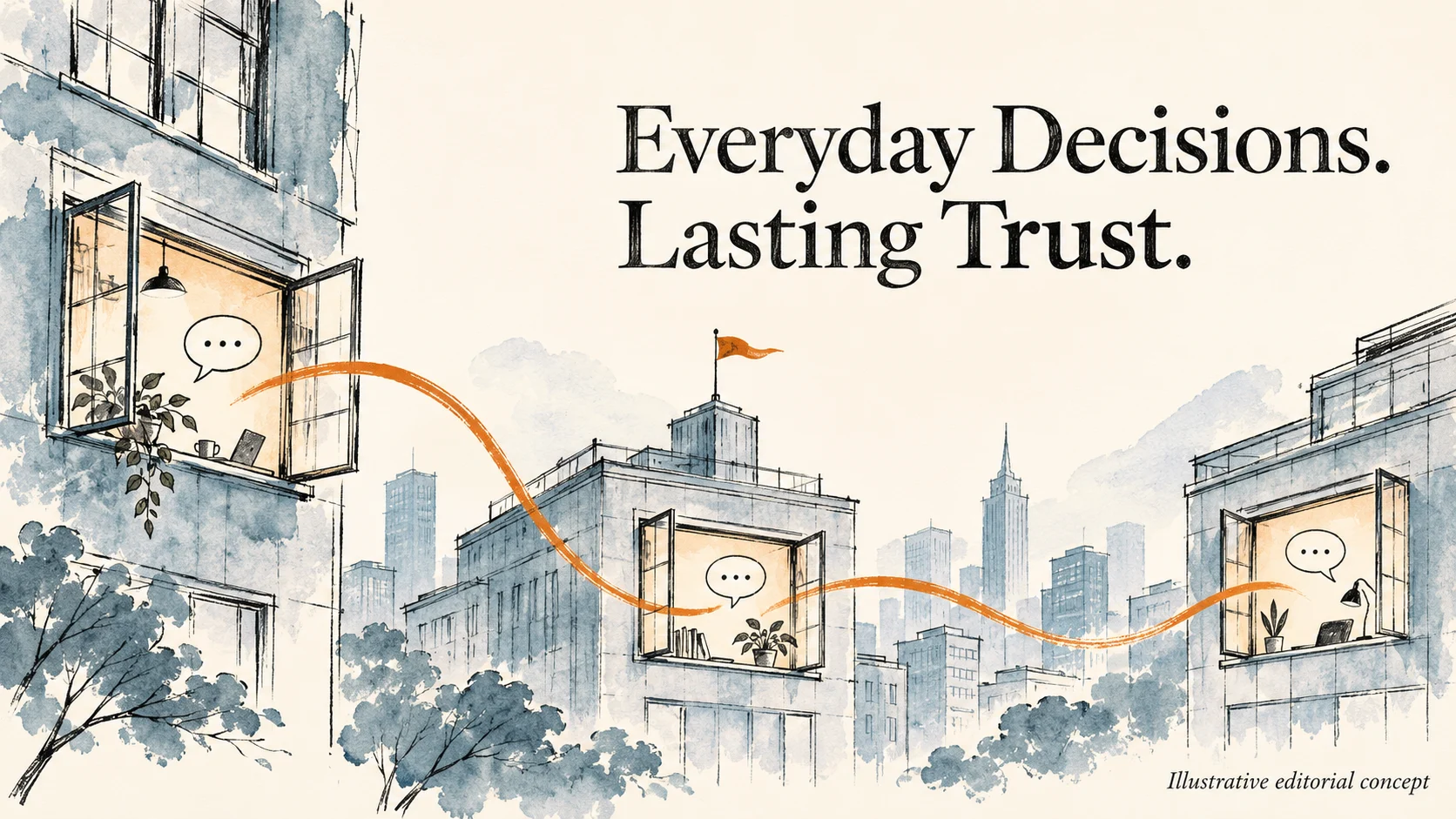
“Protect our reputation” is a broad organisational aim. A learning designer needs a more specific brief: what might an employee encounter, what should they notice and which approved action is within their responsibility?
This guide proposes a way to turn that brief into reviewable learning activities. It focuses on instructional design rather than prescribing an organisation’s incident-response process.
Name a situation the audience recognises.
Start with an ordinary working context: a service conversation, an unresolved concern or information that needs checking. Ask the relevant owner which details matter to the decision and which instructions the employee is expected to follow.
Keep the scenario specific enough to support a response without recreating an identifiable incident. A familiar setting and clear role can make the activity understandable without exposing customer or employee details.
Clarify what the learner owns.
Separate recognising a concern from investigating, approving a response or communicating externally. These may belong to different roles. The activity should make the learner’s responsibility visible and avoid rewarding actions outside the approved scope.
Agree the boundaries with the people who own the underlying process. If the next step depends on missing information, decide whether identifying that gap is itself the learning objective.
Give each interaction a teaching purpose.
A matching task can help learners distinguish related concepts. A scenario question can ask them to choose a justified next step. Neither format becomes useful simply because the learner clicks something.
Write the explanation alongside the question. Ask whether the scenario provides enough context, whether the response follows the approved source and whether another answer could reasonably be defended. Resolve ambiguity before producing media and language versions.
For role-specific programmes, review whether the same situation needs a different question for an employee, a manager or a specialist. Keep those differences explicit rather than presenting one universal response.
Define what the assessment can show.
State whether an activity checks concept recognition, interpretation or selection of a response under given conditions. Agree which answers and completion records need to be captured, and confirm reporting requirements against the delivery environment.
Keep claims proportionate to the evidence. Completing a learning activity does not independently prove an improvement in reputation or a reduction in incidents. Wider evaluation needs its own questions and evidence.
Review one complete learning loop.
Take one situation, one decision and one explanation to a subject owner and representative learner. Check that the complete loop is clear and appropriate before expanding the course. Assign ownership for future revisions when the underlying instructions change.
Explore the related reputation-risk learning design example ↗